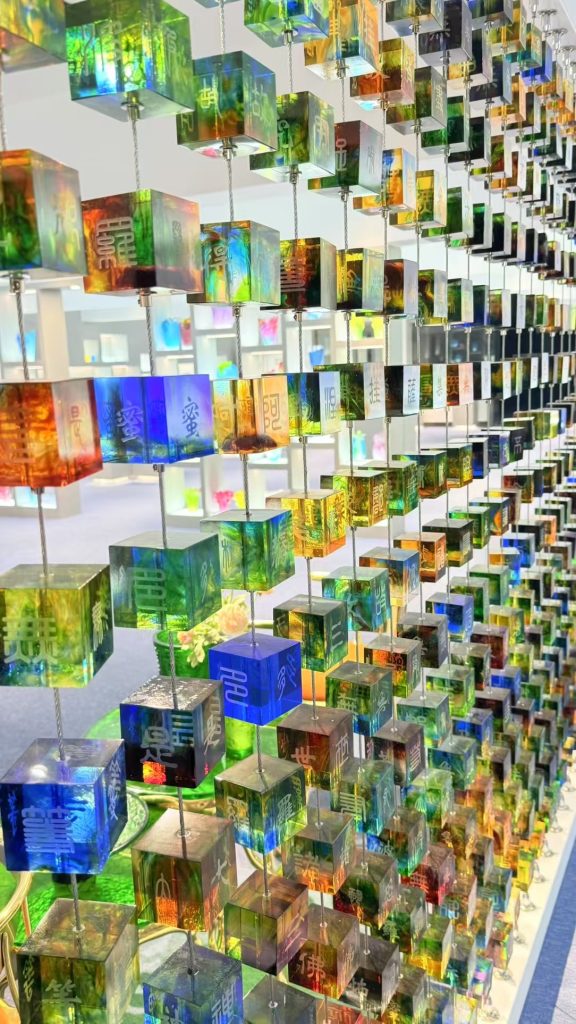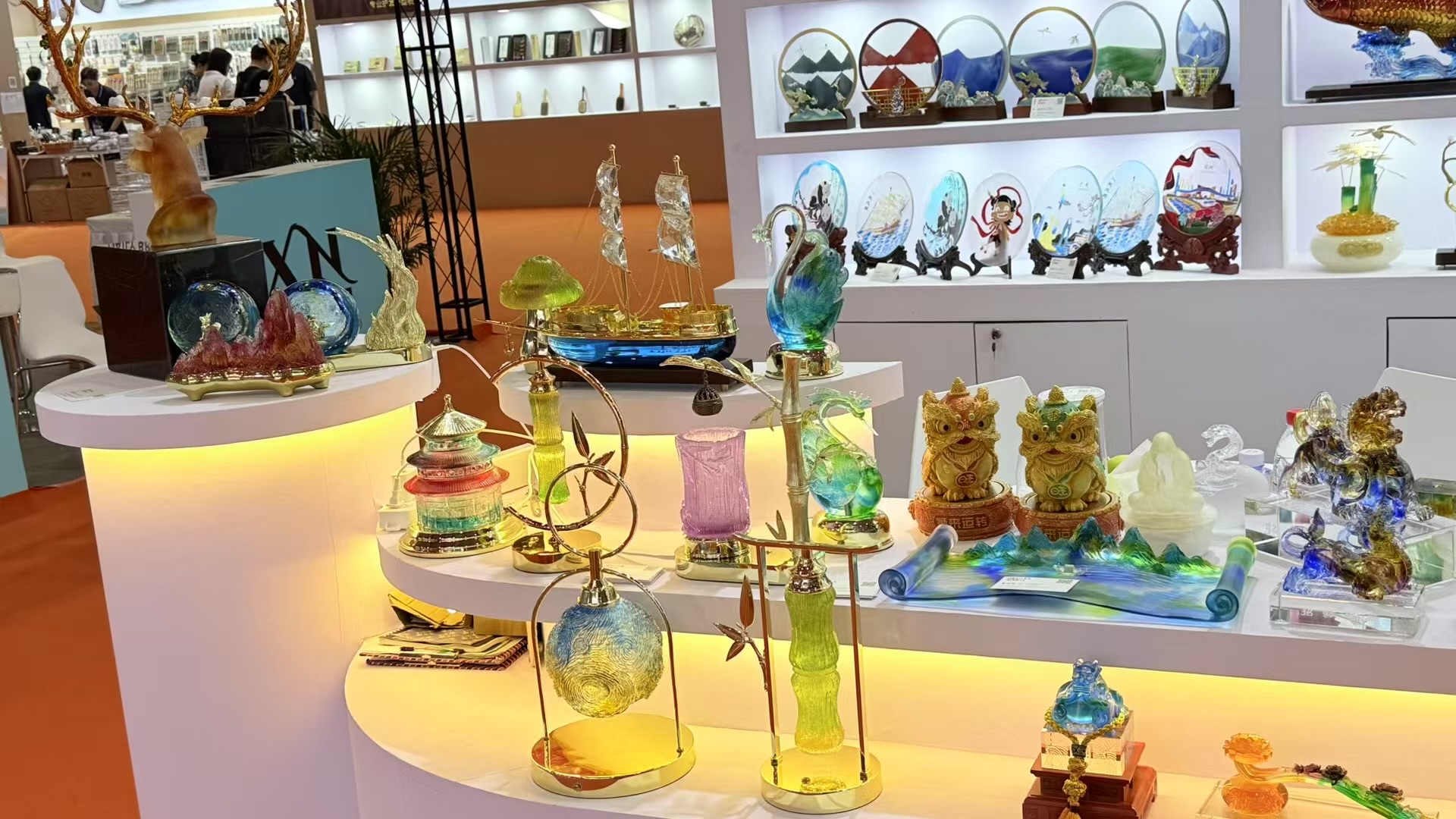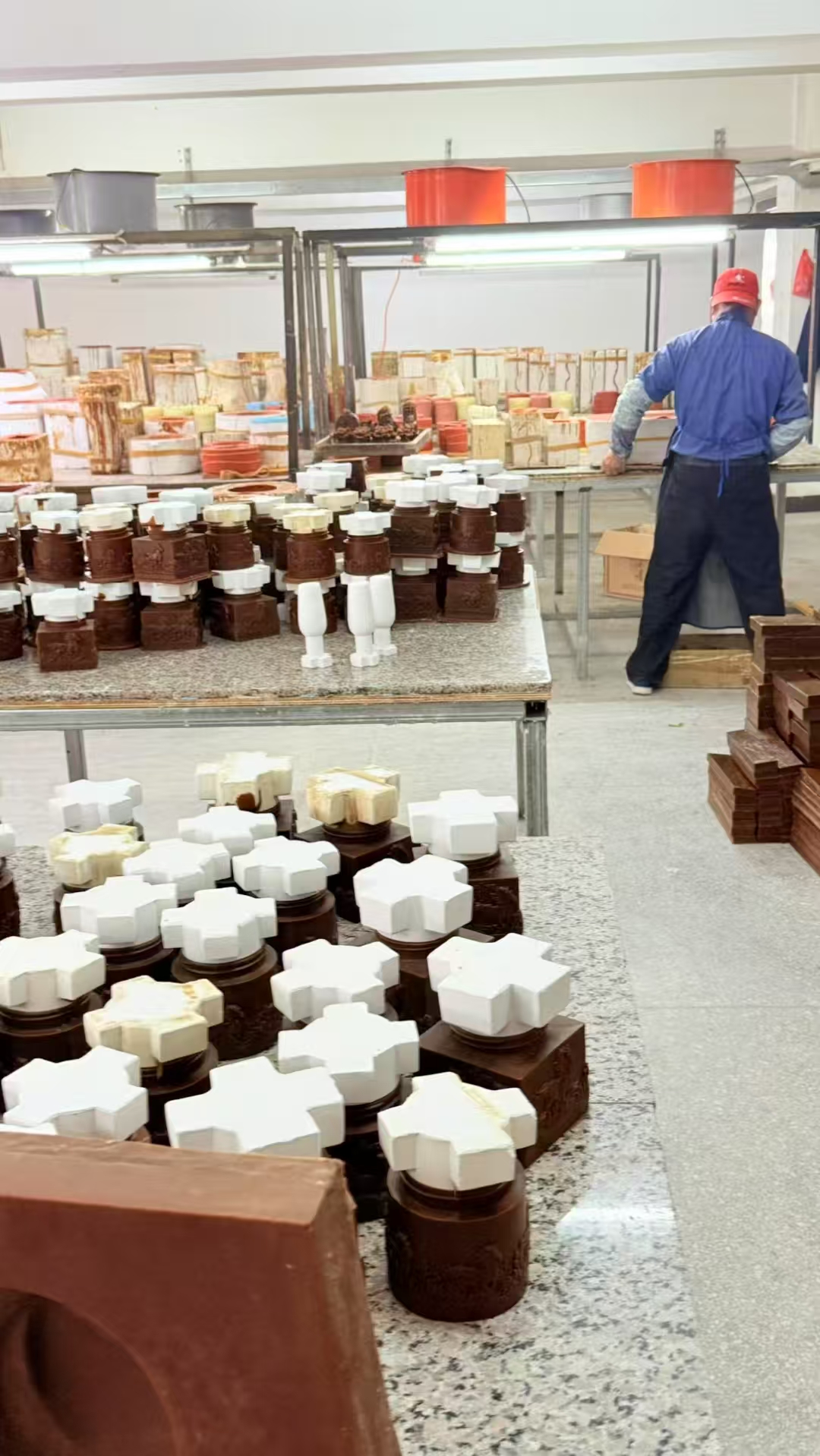
When you’re choosing materials for art pieces or interior accents, it helps to know exactly what you’re working with. Here’s a quick guide to understanding water liuli (resin “glass”) versus classic liuli (leaded colored glass).
1. What Is Water Liuli?
Water liuli is essentially a resin product: transparent resin mixed with pigments, then poured into molds. Its main perks are low cost and super straightforward production—perfect for large runs when budget and speed matter most.
2. Key Differences
A. Refractive Index & Color Stability
- Water Liuli (Resin):
- Lower refractive index, so it doesn’t bend light as much.
- Prone to aging: colors can yellow or fade over time.
- Traditional Liuli (Glass):
- High refractive index—light dances through in vibrant, consistent hues.
- Color stays true for decades, thanks to stable metal oxide blends.
B. Look, Feel & Sound
- Water Liuli:
- Surface lacks that metallic sheen—you’ll notice a more plastic-like finish.
- Tap it, and you hear a muted “thud” rather than a ringing note.
- Traditional Liuli:
- Rich, glossy luster from lead oxide content (24%+).
- A gentle knock produces a bright, lingering chime you won’t forget.
C. Weight & Presence
- Water Liuli:
- Weighs about 30% of what true liuli does—light, but less substantial.
- Traditional Liuli:
- Heavier, with a satisfying heft that feels premium in any hand-made sculpture or installation.
Why It Matters for Your Project
If you need an eye-catching centerpiece with long-term color fidelity, that unmistakable shine, and an audible resonance, traditional liuli is the way to go. But if you’re producing a high volume of pieces on a tight budget and weight isn’t a critical factor, water liuli can deliver a good look at a fraction of the cost.