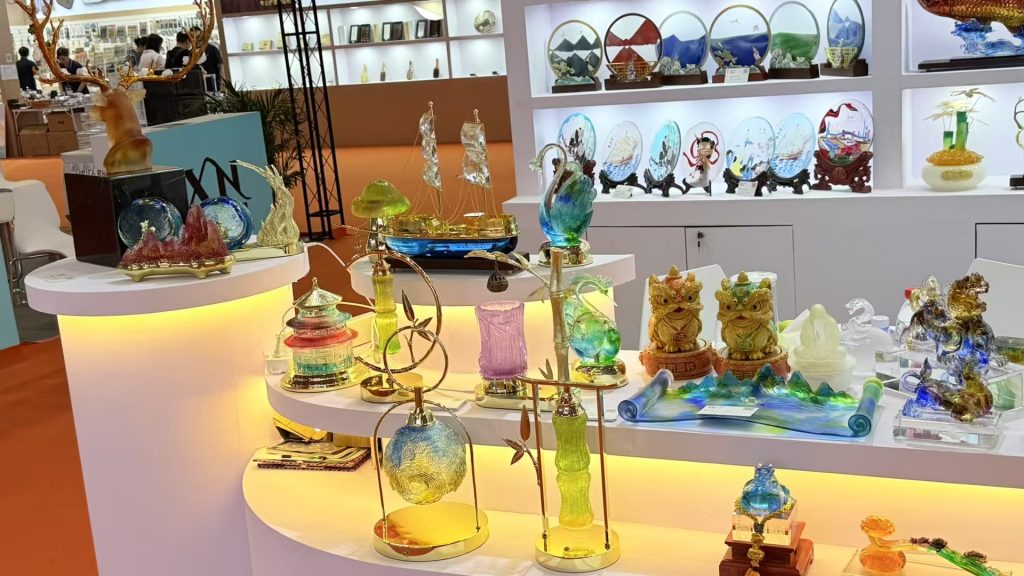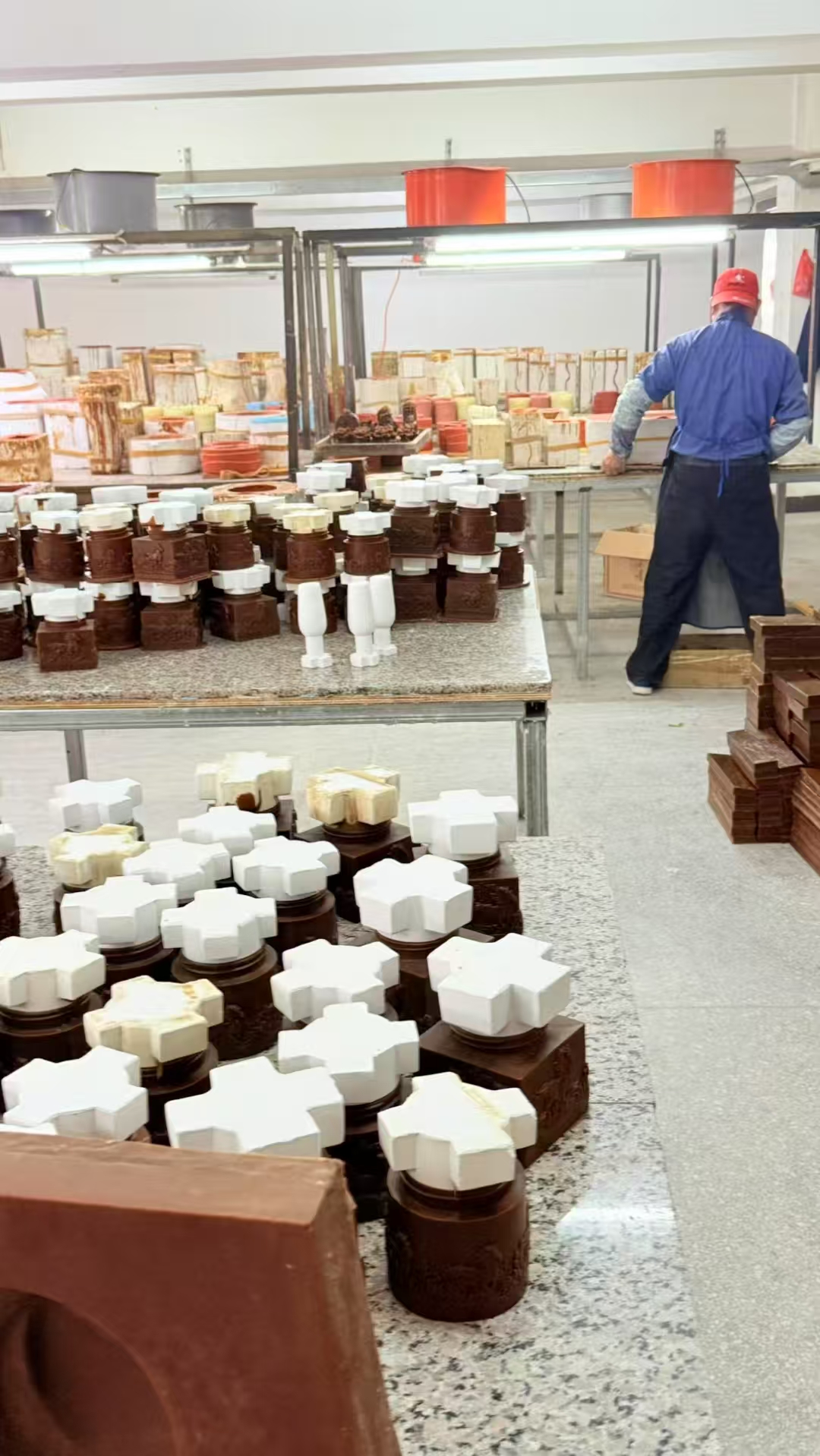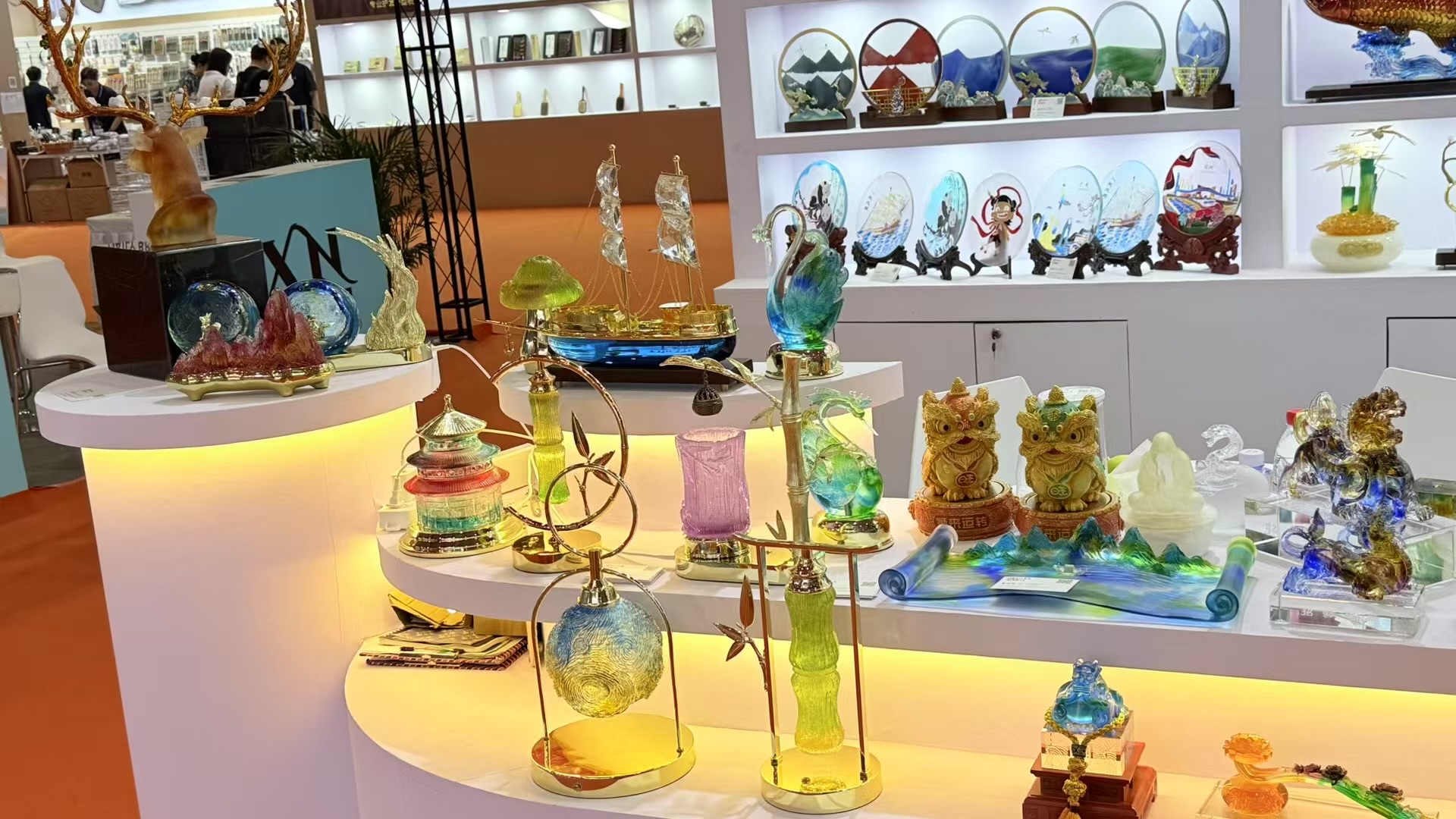
When you first see Liuli and regular glass side by side, they might look similar, but a closer look (and listen!) reveals some fascinating distinctions:
- Transparency & Feel
- Glass is fully transparent—you can see straight through it, like a clear window pane.
- Liuli, on the other hand, feels almost mystical: it’s semi-translucent, letting light glow through but still holding a soft, diffused veil.
- Firing Temperature
- Glass typically needs around 1000 °C to fuse into its final, clear form.
- Liuli’s magic happens a bit “cooler,” at roughly 900 °C, which helps preserve its vibrant hues.
- Color & Luster
- Ordinary glass tends toward neutral tones unless pigments are added afterward.
- Liuli is born in color: metal oxides melt right into the molten material, creating rich, jewel-like shades with a subtle metallic sheen that feels luxurious.
- Sound & Composition
- Tap a piece of glass and you’ll hear a crisp, high-pitched ring.
- Strike Liuli gently, and you’ll notice a distinctly bright, lingering chime—thanks to its higher metal content, each note carries a touch more resonance.
- Lead Oxide Content
- True Liuli contains at least 24% lead oxide in its mix. That extra lead is what boosts its refractive sparkle, gives it weight—and lets it capture and scatter light in that signature, almost iridescent way.
Why It Matters
Understanding these differences isn’t just trivia—whether you’re curating a gallery, designing a luxury interior, or commissioning a one-of-a-kind art piece, choosing Liuli over standard glass brings an extra layer of depth: visual warmth, tactile weight, and even an audible charm.
If you’d like to explore how Liuli can elevate your next project, let’s chat. I’d love to walk you through our process and show you samples in person.